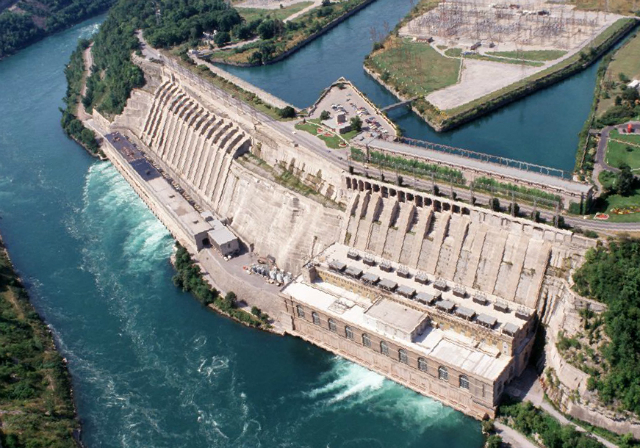
Photo: Ontario Power Generation - Adam Beck Complex. Rotated. Resized. Cropped. Licence: https://creativecommons.org/licenses/by-sa/2.0 Source: https://commons.wikimedia.org/w/index.php?curid=2564777
When we think about earning strong returns from energy companies, renewable sources don’t tend to be discussed very much. Yet, Brookfield Renewable Partners LP (TSX:BEP.UN)(NYSE:BEP) is an amazing way to participate in clean-energy generation while also earning a yield of about 5.5%.
Brookfield is one of the few pure-play renewable platforms on the market with 250 facilities generating over 10.6 gigawatts at peak production capacity. Nearly 90% of its portfolio is in hydroelectric, but I anticipate this to shrink a little as other assets come online. Nevertheless, hydroelectric is the most predictable source of power, so this adds to the company’s strong positioning.
On August 4, the company released its second-quarter results. Brookfield generated 11,618 GWh, up from 8,792 in the same period in 2016, of which Brookfield directly owns 58% and manages the remainder for a consortium of investors.
Thanks to improving hydrology (the cycle by which water evaporates, condenses, and then precipitates) Brookfield has ensured that the hydroelectric locations are able to pump more water, thus creating more energy. This was a problem last year and is only now being righted. As this situation continues to improve, I expect production to continue getting stronger for the coming quarters.
The improved hydrology also contributed to the company generating a net income of US$85 million compared to a loss of US$19 million. All told, its normalized funds from operations grew to US$170 million from US$155 million — good for a per unit normalized FFO of US$0.57.
Going forward, there are a few opportunities for the company to continue boosting earnings.
First, Brookfield completed the privatization of Isagen S.A., the third-largest electricity generator in Columbia. This deal cost the firm and its partners US$2.8 billion and should begin to add significant returns to the balance sheet. During the second quarter, Brookfield signed its first 10-year power contract with a local utility for 60 GWh/year.
Second, Brookfield is currently working on acquiring TerraForm Global Inc. and 51% of TerraForm Power Inc. Brookfield is contributing US$500 million to the total US$1.41 billion acquisition price, which will add 1,365 MW of solar power — something that has been missing from Brookfield’s portfolio. These deals should close in the second half of 2017.
And finally, the company has other smart growth opportunities, both through acquisition and organic growth. It acquired a 25% interest in the U.K.’s largest pumped storage asset (a type of hydroelectricity), paying US$252 million that comprises 2.1 GW of capacity. It also will bring online an additional 169 MW of capacity in the next two years, which will increase its FFO by about US$20.7 million. And on the acquisition front, I expect much more to come because it is currently sitting on over US$2 billion in liquidity.
Brookfield currently yields about 5.5%, which has dropped a bit since the stock has been increasing. Management’s target is to deliver 12-15% total annualized returns to its shareholders and, with the way the company is going, this seems very likely. Along the way, the dividend should grow by anywhere from 5% to 9% on an annual basis.
If you ask me, this is a no-brainer. Brookfield generates clean energy and provides significant income to your portfolio. Why wait?