If you stay in the market as long as Warren Buffett has, you may see most of what it has to offer. But the thing about the market is that it’s unpredictable. How it reacts to external factors is usually impossible to predict accurately.
And even though Buffett claimed in a recent interview that the market panic of 1987 and even the 2008 collapse were much scarier, he thinks the dual-factor impact of oil market crash and coronavirus is different.
Still, he sticks to the fact that the market crash of 2008, when US$3.5 trillion money-market accounts almost lost their value, was when everything ground to a halt. And if it weren’t for a “gutty-move” made by Hank Paulson, who was the treasury secretary at that time, everything would have stopped there.
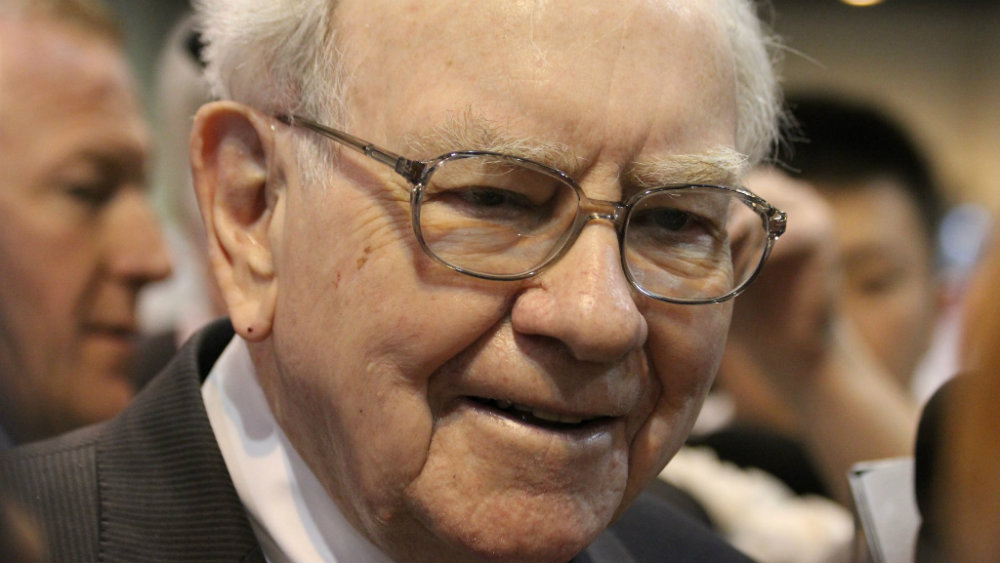
Image source: The Motley Fool
How is Warren Buffett reacting to the market?
Whatever his perception is of the crash, compared to the ones that came before this, it would be a good idea to see what he’s doing. They say actions speak louder than words, and it’s smart to learn from the actions of one of the most successful investors in history.
For one, Buffett isn’t selling his airline stocks. A significant chunk of his investment is tied up in airline companies, primarily in Southwest, United, American, and Delta Airlines. He bought a million Delta Airline shares at the end of February. The airline business has taken a huge hit from the coronavirus. People around the globe are abstaining from travel, and all transportation businesses, especially international airlines, are suffering most of the consequences.
Still, Buffett is sticking to the companies, instead of dumping them in the market, as many retail and institutional investors are doing right now. So, how should we perceive this decision? It would not be fair to compare an everyday retail investor’s portfolio management to that of the Oracle of Omaha. But we could learn that even in a variety of crises, Warren Buffett sticks to his investment philosophy.
Holding on to good businesses
Buffett always preaches investing in good businesses and holding on to them. And this is easy to emulate for investors of any scale. Finding a good business doesn’t just mean sticking to the fundamentals now. It’s smart to consider the future prospects of a business and how the company is poised to take advantage of an ever-changing technology-focused market.
Take Thompson Reuters (TSX:TRI)(NYSE:TRI) as an example. It markets itself as an “answer company,” which, ironically, raises a lot of questions. What does it answer? Does it sell answers? How can answers be commoditized? These are just a few questions a person unfamiliar with the company might ask.
Simply put, Thompson Reuters is a consultant that provides solutions to the professionals and departments in corporations, governments, legal matters, news, media, tax, and accounting. It’s a century-old company and has the current market value of $43.8 billion.
Currently, the company offers a modest yield of 2.33%. But a better number it offers is a 10% CAGR. The company has been growing quite consistently. And since finding the right answers and having a broader perspective of what’s going on in the market is the company’s business, we can hope that at least this company will know how to adapt.
Foolish takeaway
As a long-term passive investor, even if you keep just a fleeting eye on the stock market, you will learn quite a lot in several years’ time. Imagine what Warren Buffett has seen. He may have garnered an unrivaled experience of the market over his many years as an investor. And if he claims that this market crash has some unique instigation factors, it might be a cause to worry. But if we take a look at his actions, the “do nothing” strategy seems the smartest option right now.